How immunotherapy works
- Your immune system normally finds and kills abnormal cells.
- Many cancers protect themselves by pressing the brakes on the immune cells (brakes called PD-1, PD-L1 and CTLA-4), so the immune system ignores them.
- Immunotherapy medicines release these brakes, so your own immune cells can recognise and attack the cancer.
- Because the immune system is now more active, it can sometimes attack normal organs too. This causes the side effects, which are different from chemotherapy.
What to expect
- It is a drip every 3, 4 or 6 weeks, over 30 to 60 minutes, usually for up to 2 years.
- It works for some people, not all. Your doctor will explain your chance of benefit; tests like PD-L1 and MSI help predict it.
- It may take 2 to 3 months to work. When it works, the effect can last for years, even after stopping.
- Rarely, a scan looks worse at first before improving, as immune cells gather in the tumour.
Which organs can be affected
Tap a number on the body, or a topic.
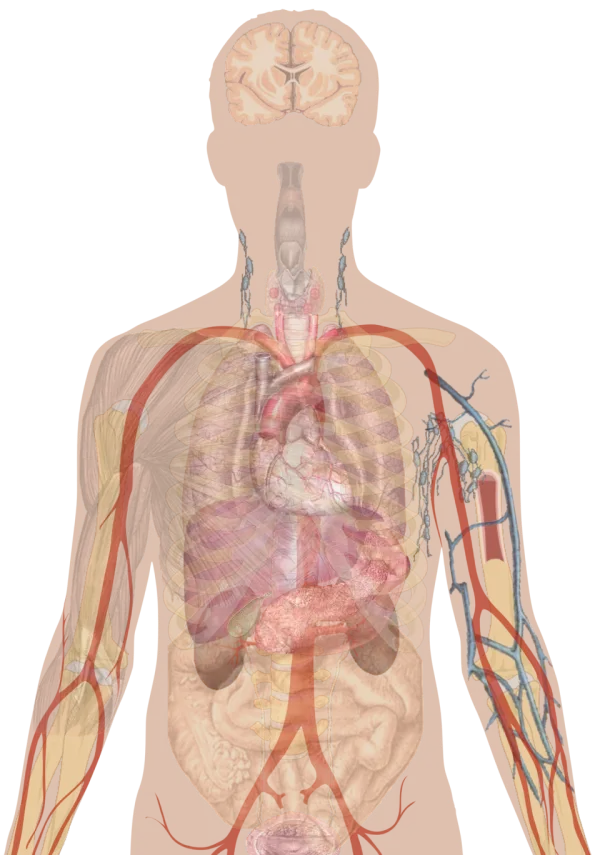
Body illustration: Mikael Häggström, public domain.
1. Thyroid
- The most common: the thyroid becomes overactive and then underactive.
- Found on routine blood tests; a daily thyroxine tablet corrects it. Treatment usually continues.
2. Pituitary and adrenal glands
- Rare: severe tiredness, headache, dizziness.
- Cortisol tests; replaced with tablets if needed.
3. Lungs
- New cough or breathlessness.
- Report early; treated with steroids.
4. Liver
- Usually found on blood tests before symptoms.
- Yellow eyes or dark urine need urgent care.
5. Bowel
- Loose stools, tummy pain or blood in stools.
- Report early, even if mild; treated with steroids.
6. Skin
- Rash and itching: the most common side effect.
- Moisturisers, anti-itch tablets, steroid creams.
7. Joints and other organs
- Joint pain, rarely the kidneys, heart, nerves, eyes, or diabetes.
- Tell us about any new symptom.
How it is different from chemotherapy
| Chemotherapy | Immunotherapy | |
|---|---|---|
| Hair loss | Common with many medicines | Rare |
| Nausea and low counts | Common | Uncommon |
| When side effects appear | Predictable days after each cycle | Any time, even months later or after stopping |
| How they are treated | Medicines for each symptom | Usually steroids, and the immunotherapy may be paused |
Three kinds of side effects
Settle on their own
They ease within days, usually before the next cycle.
- Mild tiredness
Medicines help
We have medicines or simple measures to prevent or treat these. Tell us early.
- Rash and itching: creams and tablets
- Loose stools, cough or breathlessness: steroids, if reported early
Need time to wear off
No medicine reverses these quickly. They improve slowly after treatment ends.
- Tiredness that builds up
We check with tests
Uncommon but important. We look for them with blood tests or scans.
- Thyroid tests before doses
- Liver, kidney and sugar tests
- Cortisol tests
Four rules for immunotherapy
- Report any new symptom early, even if it seems small. Early treatment is simple; late treatment is harder.
- Side effects can appear months after starting, or even after stopping.
- Tell every doctor you see that you are on immunotherapy (carry your treatment card).
- Steroids given for side effects do not usually stop the immunotherapy from working.
Newer immune treatments
Bispecific antibodies (such as teclistamab or blinatumomab) link immune cells directly to the cancer, and CAR-T cell therapy uses your own modified immune cells. Both are used mainly in blood cancers and some lung cancers, and are given with close monitoring for an immune flare (cytokine release).
Already on treatment?
Choose your regimen to see the side effects of your own medicines, when to expect them, and what helps.
How your treatment is decided
Every new patient's case is discussed at our multidisciplinary tumour board. This is a meeting where the medical oncologist, surgical oncologist, radiation oncologist, radiologist and pathologist, and when needed the nuclear medicine and palliative care teams, review your scans, biopsy and reports together.
- Cancer treatment often combines surgery, radiotherapy and medicines. The board agrees on the right treatments and the right order.
- You get one agreed plan, based on the latest evidence, instead of separate opinions.
- Cases are discussed again when the situation changes, for example after surgery or if a scan shows new findings.
Written and medically reviewed by Dr Prathyusha Eaga, MD, DM (Medical Oncology). Last reviewed: 12 October 2026. Based on NCCN and ESMO guidelines.
Have questions?
Book a hospital visit, a video consultation or a second opinion.